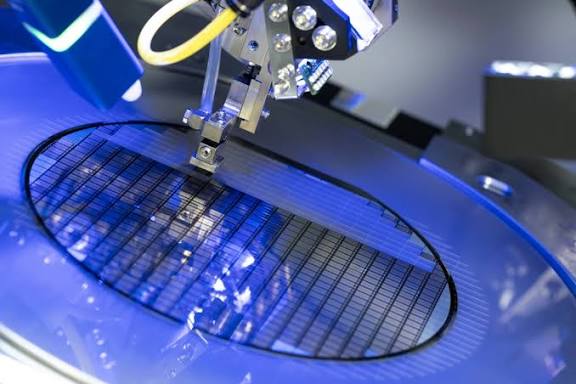
Radiation-Resilient Computing for Space Data Centres
Enabling reliable computing in the space environment
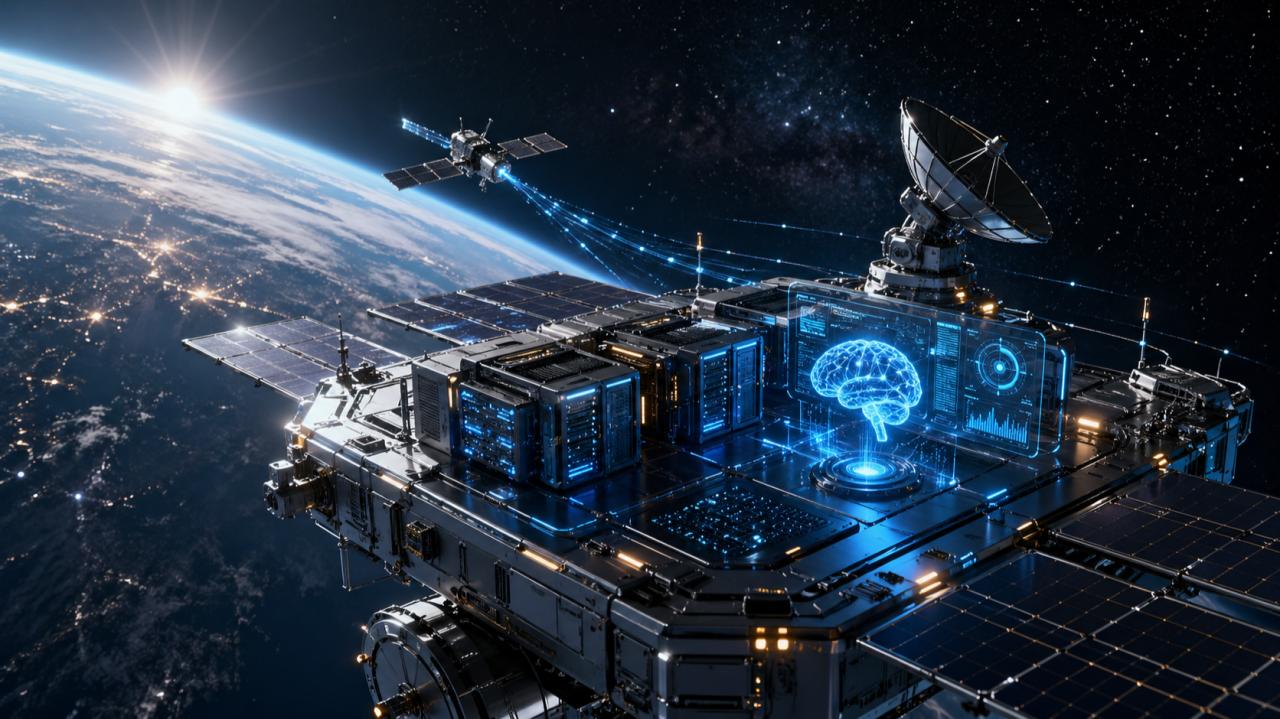
Future space infrastructure may increasingly rely on high-performance computing platforms for artificial intelligence (AI), scientific data processing, Earth observation and autonomous spacecraft operations. Space-based data centres could offer new approaches to data processing and communications, but their electronic systems must operate reliably in a radiation environment that can cause transient errors, degrade semiconductor performance and damage sensitive components.
SCAPA is investigating the use of laser–plasma acceleration as a versatile approach to generating energetic particles and radiation for space-related research. These sources offer opportunities to investigate radiation-induced effects in semiconductor devices and electronic components under controlled laboratory conditions.
Investigating radiation effects in computing hardware
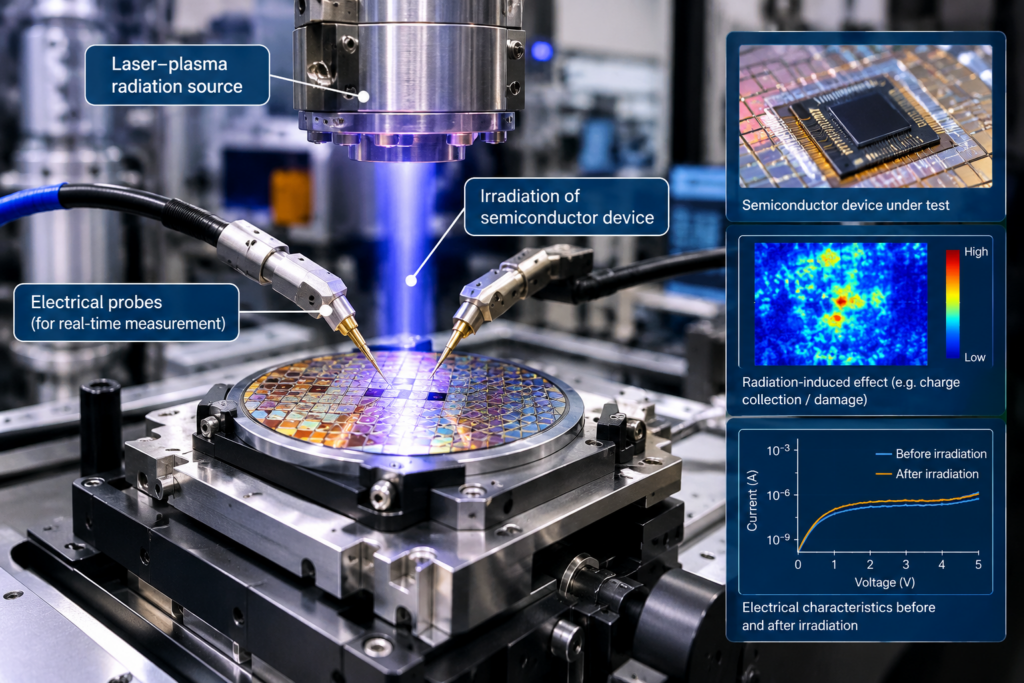
Potential research applications include the characterisation of radiation-induced errors in processors and memory devices, the investigation of single-event effects in advanced integrated circuits, and the assessment of radiation-induced degradation in semiconductor and power-electronic technologies. Such studies could help researchers understand the vulnerabilities of high-performance computing hardware and evaluate strategies for improving its reliability in space.
Supporting the development of future space infrastructure
By combining laser-driven radiation sources ( high-energy electron beams, intense X-ray and gamma-ray radiation, energetic ion beams) with appropriate device diagnostics and post-irradiation characterisation, SCAPA can contribute to research into radiation-tolerant electronics and resilient computing architectures. This work could support the development of reliable onboard AI systems, high-performance computing platforms and future space-based data centres.
The precise radiation conditions required for each application depend on the intended orbit, mission duration, shielding and device technology. Experimental programmes can therefore be designed around specific research questions and the capabilities of the available radiation sources